Author: Dr. Vikas Jasrotia

NEET JEE Solved Questions Solid State NEET JEE Solved Questions Solid State: Q1. The three states of matter are solid, liquid, and gas. Which of the following statement is/are true about them                                                                                                                [AIIMS 1991] (a) Gases and liquids have viscosity as a common property…

Read More

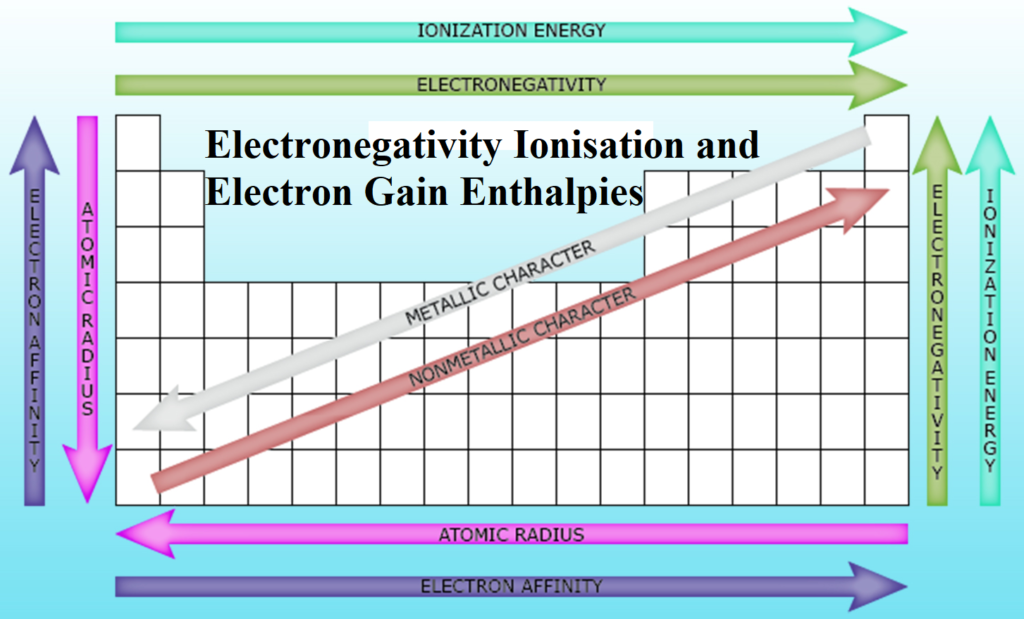
Electronegativity Ionisation and Electron Gain Enthalpies Electronegativity Ionisation and Electron Gain Enthalpies: Ionization Enthalpy (∆iH): Minimum amount of energy required to remove the most loosely bound valence electron from an isolated gaseous atom so as to convert it into gaseous cation. It may be represented as:  X(g) + ∆iH → X+(g) + e– Its unit is kJ/mol or J/mol. The energy required to remove the first electron from the outermost shell of a neutral atom is called first ionization enthalpy (∆iH1) X(g) + ∆iH1 → X+(g) + e– Second Ionisation enthalpy (∆iH2) is the amount of energy required to remove…

Read More

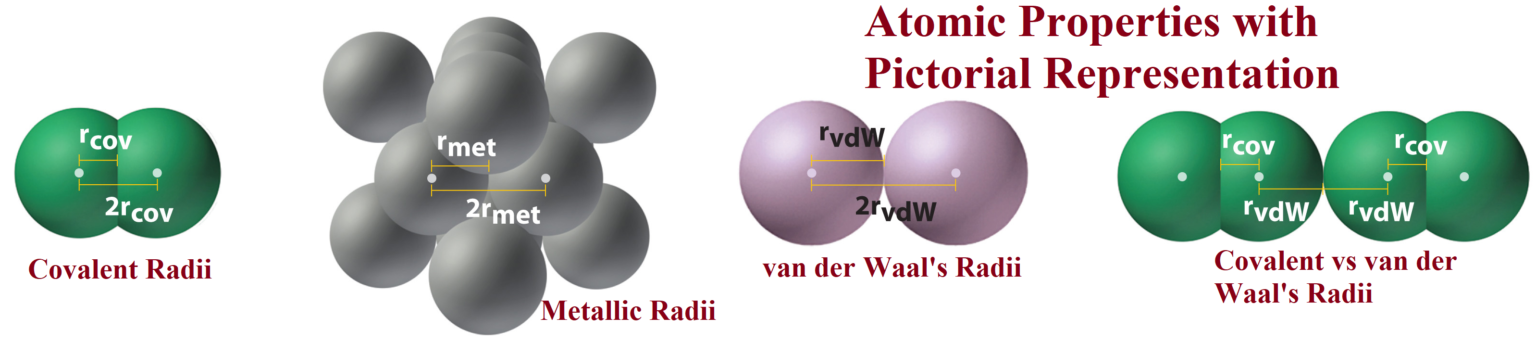
Atomic Properties with Pictorial Representation Atomic Properties with Pictorial Representation: Atomic Properties: The properties such as atomic radius, ionic radius, ionisation energy, electronegativity, electron affinity, and valence, called atomic properties. Atomic Radius: It is defined as the distance from the centre of the nucleus to the outermost shell containing electrons. Atomic radius is commonly expressed in picometre (pm) or angstrom (Å).it is measured by x-ray diffraction method or by spectroscopic methods. Covalent radius: One-half of the distance between the nuclei of two covalently bonded atoms of the same element in a molecule (used for non-metals). Van der Waals radius:…

Read More

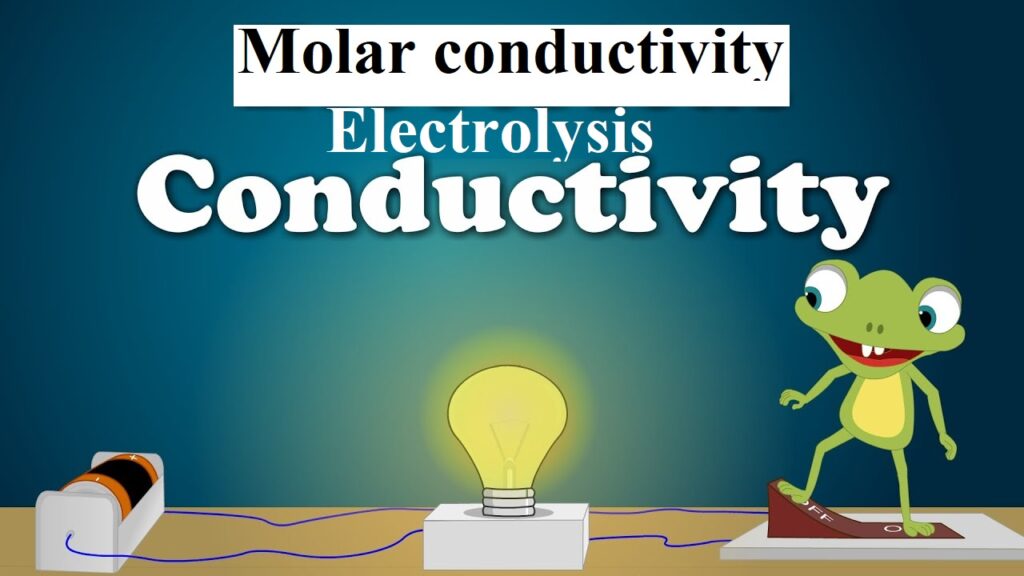
Conductivity Molar conductivity and Electrolysis Resistance (R): The electrical resistance is a hindrance to the flow of electrons. Its unit is the ohm (Ω). The resistance of a conductor is directly proportional to the length of the conductor (Ɩ) and inversely proportional to the area of cross-section (A) of the conductor.    R α Ɩ /A R = ρ Ɩ /A where ρ (rho) is a constant called resistivity or specific resistance. Its unit is ohm-meter (Ω m) or ohm-centimeter (Ω cm). Resistivity (ρ): It defined as the resistance offered by a conductor having unit length and unit area of…

Read More

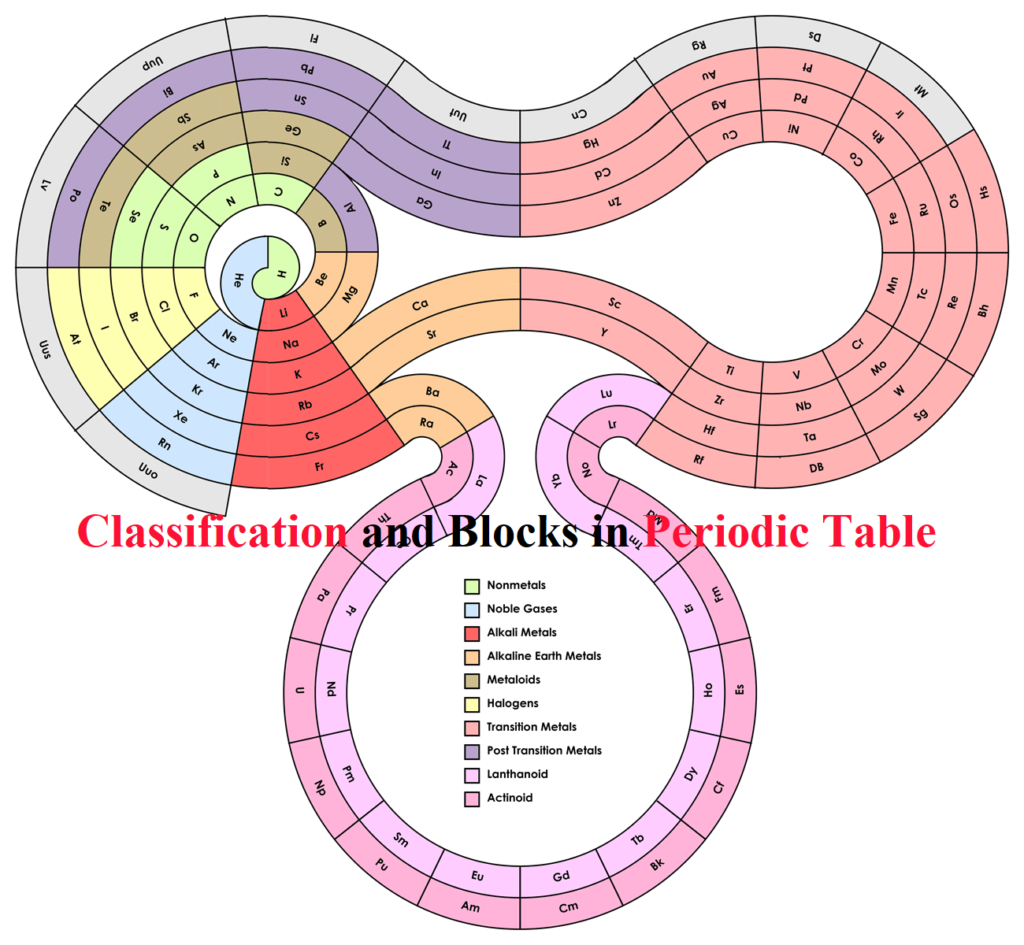
Classification and Blocks in Periodic Table Classification and Blocks in Periodic Table: Topics covered: Earlier classifications Dobereiner’s Triads Newland’s law of octaves Mendeleev’s Periodic Classification Modern Periodic Table or Moseley’s Periodic Law  With the discovery of a large number of elements, it became difficult to study the elements individually, so the classification of elements was done to make the study easier. Earlier Classification: Dobereiner’s Triads: In triads, the atomic mass of the middle element is approximately the average of the other two elements. This is known as the Law of Triads. This classification was applicable to very few elements and…

Read More

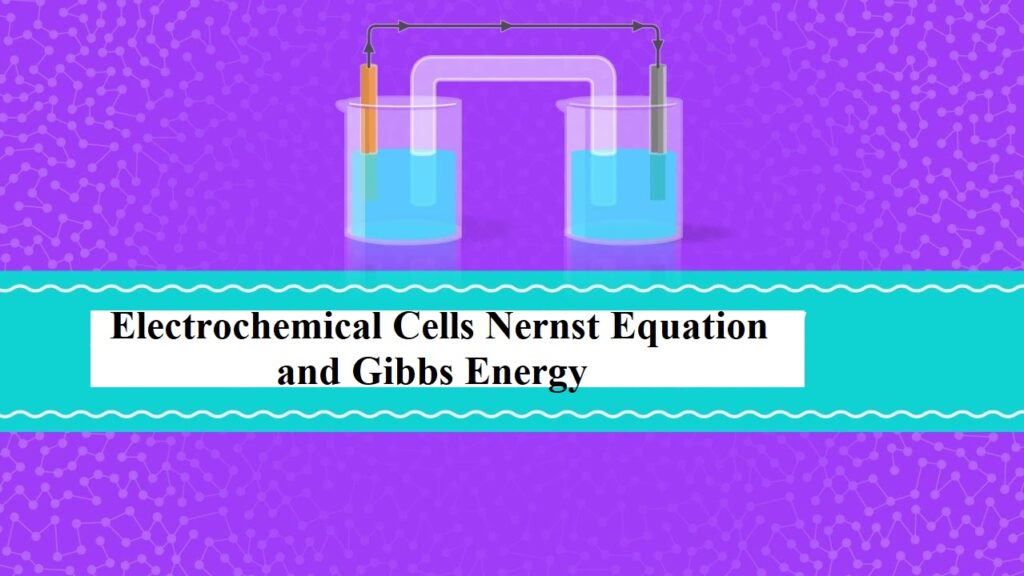
Electrochemical Cells Nernst Equation and Gibbs Energy Syllabus:- Electrolytic cells & Galvanic cells The function of Salt Bridge Redox reaction, EMF of the cell, standard electrode potential Standard hydrogen electrode (SHE) Nernst equation and its application to Chemical cell Equilibrium Constant from Nernst Equation Electrochemical Cell and Gibbs Energy Electrochemistry: It is a branch of chemistry that deals with the relationship between chemical energy and electrical energy and their interconversions. Redox Reactions: Oxidation is the process that involves the loss of electrons & reduction is a process in which it involves the gain of electrons. The reactions which involve…

Read More

Solved Questions Structure of Atom Que 1. Neutrons can be found in all atomic nuclei except in one case. Which is this atomic nucleus and what does it consists of? Ans 1. Hydrogen atom. It consists of only one proton. Que 2. Calculate wave number of yellow radiations having a wavelength of 5800 A0. Ans 2. Wave number = 1/ wavelength Wavelength = 5800 A0= 5800 x 10-10 m Wave number = 1/5800 x 10-10 m = 1.72 x 10⁶ m-1 Que 3. What are the values of n and l for 2p orbital? Ans 3. n=2 and l= 1…

Read More

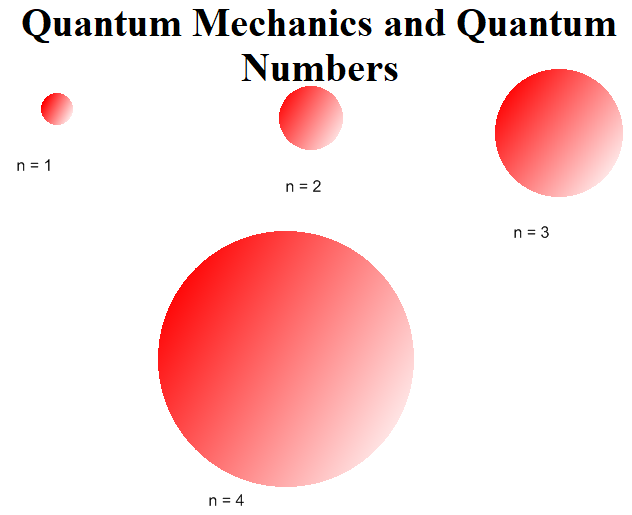
Quantum Mechanics and Quantum Numbers Quantum Mechanics and Quantum Numbers post provides complete information about quantum numbers with examples and wave function Quantum Mechanics: Quantum mechanics takes into account the dual behavior of matter. An equation, given by Schrodinger, which has a better physical interpretation in terms of wave properties is Ĥ ψ = Eψ. Where Ĥ is called Hamiltonian operator, E is the total energy of the system (K.E + P.E) and ψ is called the wave function. Physical Significance of ψ: The wave function (ψ) is a mathematical function and it has no physical significance. Wave functions of…

Read More

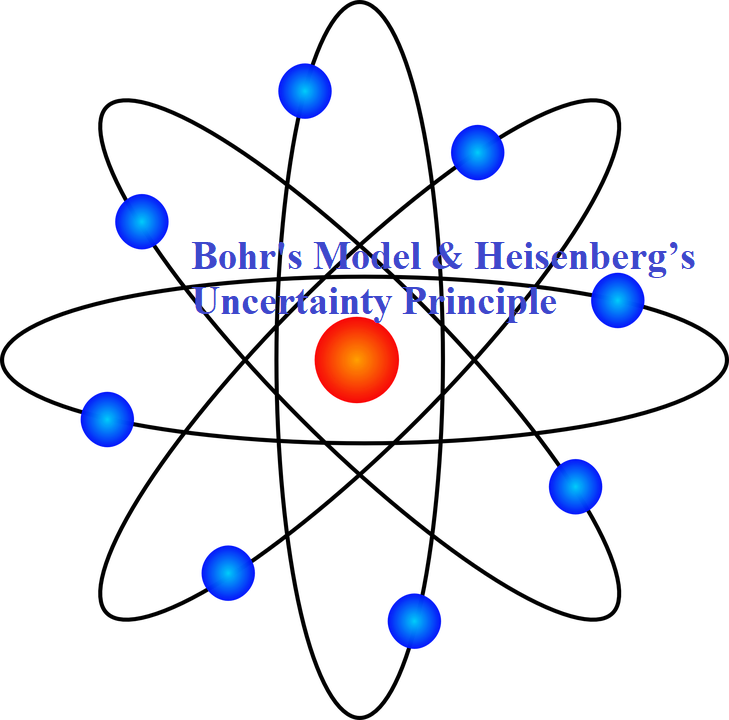
Bohr’s Model & Heisenberg’s Uncertainty Principle Bohr’s Model & Heisenberg’s Uncertainty Principle Bohr’s Model of Atom: The general features of the structure of the hydrogen atom and its spectrum was first explained by Niels Bohr. The important postulates of his theory are: 1. The electron in the hydrogen atom can move around the nucleus in circular paths of fixed radius and energy. These paths are called orbits or stationary states or allowed energy states. These energy levels are numbered as 1,2,3 etc or as K, L, M, N, etc. These numbers are known as Principal quantum numbers.         …

Read More

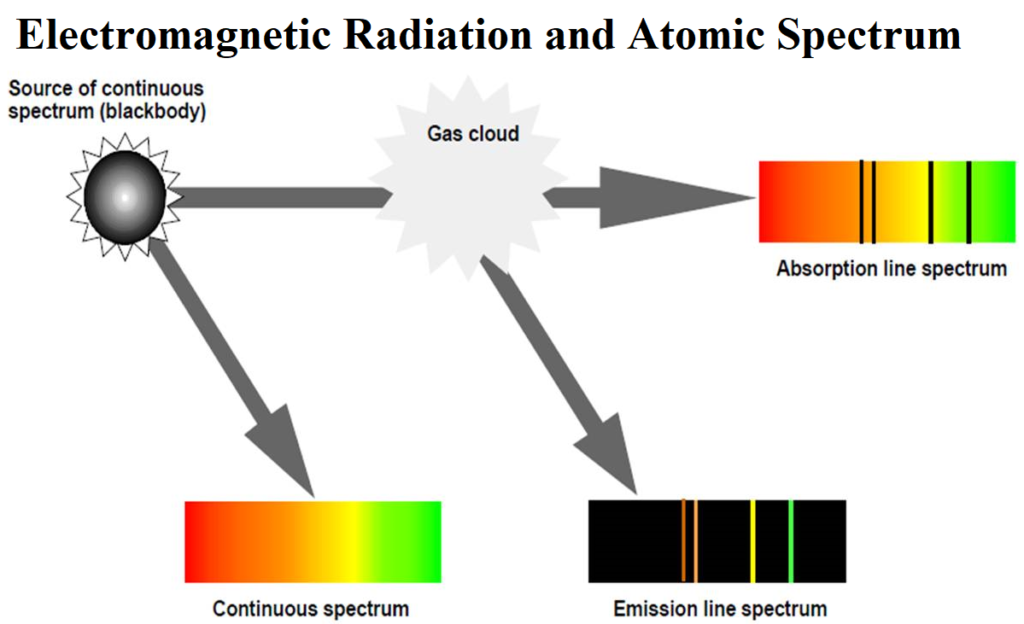
Electromagnetic Radiation and Atomic Spectrum Electromagnetic Radiation and Atomic Spectrum Electromagnetic radiations: The radiations which are associated with electrical and magnetic fields are called electromagnetic radiations. When an electrically charged particle moves under acceleration, alternating electrical and magnetic fields are produced and transmitted. These fields are transmitted in the form of waves. These waves are called electromagnetic waves or electromagnetic radiations. Properties of electromagnetic radiations: (i) Oscillating electric and magnetic field is produced by oscillating charged particles. These fields are perpendicular to each other and both are perpendicular to the direction of propagation of the wave. (ii) They do…

Read More