Close Menu
    Facebook X (Twitter) Instagram
    ScienceMotive
    • Class 9
      • Matter in Our Surroundings
      • Is Matter Around Us Pure
      • Atoms and Molecules
      • Structure of the Atom
      • The Fundamental Unit of Life
    • Class 10
      • Chapter 1: Chemical Reactions and Equations
      • Chapter 2: Acids, Bases & Salts
      • Chapter 3: Metals & Non-Metals
      • Chapter 4: Carbon and its Compounds
      • Chapter 5: Periodic Classification of Elements
      • Chapter 6: Life Processes
      • Chapter 7: Control and Coordination
      • Chapter 8: How Do Organisms Reproduce?
      • Chapter 9: Heredity and Evolution
      • Chapter 10: Light – Reflection and Refraction
      • Chapter 11: Human Eye and the Colourful World
      • Chapter 12: Electricity
      • Chapter 13: Magnetic Effects of Electric Current
      • Chapter 14: Sources of Energy
      • Chapter 15: Our Environment
      • Chapter 16: Management of Natural Resources
    • Class 11
      • Chemisrty 11
        • Chapter – 1 Some Basic Concepts of Chemistry
        • Chapter – 2 Structure Of Atom
        • Chapter – 3 Classification of Elements and Periodicity in Properties
        • Chapter – 4 Chemical Bonding and Molecular Structure
        • Chapter – 5 States of Matter
        • Chapter – 6 Thermodynamics
        • Chapter – 7 Equilibrium
        • Chapter – 8 Redox Reaction
        • Chapter – 10 s-Block Elements
        • Chapter – 13 Hydrocarbons
    • Class 12
      • Chemistry 12
        • The Solid State
        • Solutions
        • Electrochemistry
        • Chemical Kinetics
        • Surface Chemistry
        • p – Block Elements
        • d & f Block Elements
        • Coordination Compounds
        • Haloalkanes and Haloarenes
        • Alcohols, Phenols and Ethers
        • Aldehydes, Ketones and Carboxylic Acids
        • Amines
        • Biomolecules
        • Polymers
        • Chemistry in Everyday Life
    • Practice Questions
      • +1
      • +2
    • Test Series
      • Class 9 Test Series
      • Class 10 Test Series
      • Class 11 Test Series
      • Class 12 Test Series
    • World
      • Current Affairs
      • General Knowledge
    ScienceMotive
    Home » Chemical Reactions and Equations – Oxiadtion, Reduction in Daily Life

    Chemical Reactions and Equations – Oxiadtion, Reduction in Daily Life

    Dr. Vikas JasrotiaBy Dr. Vikas JasrotiaSeptember 22, 2020Updated:June 7, 2023No Comments
    Share
    Facebook WhatsApp Telegram Twitter Email

    The Effect of Oxidation-Reduction in Daily Life Corrosion

    Many metals are chemically active elements and get easily affected by substances like moisture, air, acids, etc and undergo Oxidation, Reduction in Daily Life.

    1. Corrosion – The process of slow conversion of metals into their undesirable compounds due to their reaction with oxygen, water, acids, gases etc. present in the atmosphere is called corrosion.
    2. Rusting of Iron: We know iron articles that are shiny when new and gets coated with a reddish-brown powder when left for some time this process is called Rusting of Iron. Chemically, Rust is a hydrated ferric oxide (Fe2O3.xH2O)
    • Advantages of Corrosion: Though corrosion is undesirable, it can be advantageous in case of aluminium which on exposure to air, gets coated with a protective layer of aluminium oxide. This protects the metal underneath from further corrosion and damage.           
    • The black coating on silver and the green coating on copper are examples of corrosion in which the oxides formed a strong bond to the surface of the metal, preventing the surface from further exposure to oxygen and consequently slowing down corrosion.                   
    • Rusting of iron can be prevented by painting, oiling the surface or by galvanization.
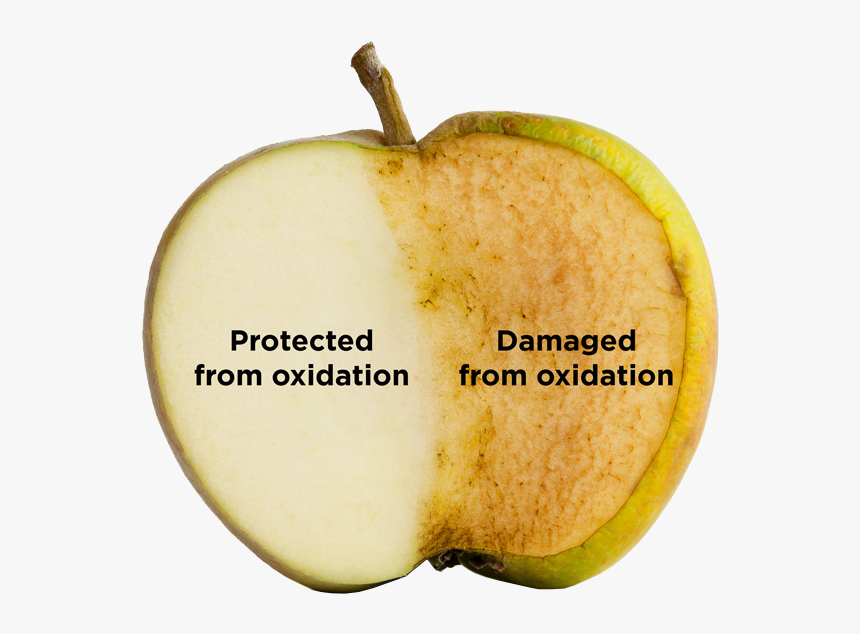
    • Rancidity:  When oils and fats or foods containing oils and fats are exposed to air, they get oxidized due to which the food becomes stale (no longer fresh and pleasant to eat; hard or dry) and gives a bad taste or smell this is called Rancidity. The most important cause of rancidity is the deterioration in fats and fatty foods because of the oxidation process. When an oxygen atom replaces a hydrogen atom in the fatty acid molecule it destabilizes the molecule. Factors which accelerate fat oxidation include salt, light, water, bacteria, moulds trace metals (iron, zinc, etc.). Above mentioned topics are important examples of Oxidation Reduction in Daily Life

              It can be prevented by using various methods such as by adding antioxidants to the food materials, Storing food in an airtight container and by flushing out air with nitrogen.

     What you have learnt 

    •  A complete chemical equation represents the reactants, products and their physical states symbolically.
    •  A chemical equation is balanced so that the numbers of atoms of each type involved in a chemical reaction are the same on the reactant and product sides of the equation. Equations must always be balanced.
    • In a combination reaction, two or more substances combine to form a new single substance.
    • Decomposition reactions are opposite to combination reactions. In a decomposition reaction, a single substance decomposes to give two or more substances.
    • Reactions in which heat is given out along with the products are called exothermic reactions.
    • Reactions in which energy is absorbed are known as endothermic reactions. When an element displaces another element from its compound, a displacement reaction occurs.
    • Two different atoms or groups of atoms (ions) are exchanged in double displacement reactions.
    • Precipitation reactions produce insoluble salts.

    Oxidation Reduction in Daily Life also involves the gain or loss of oxygen or hydrogen by substances. Oxidation is the gain of oxygen or loss of hydrogen. The reduction is the loss of oxygen or gain of hydrogen. 

    Advertisement
    Key Points Oxidation and reduction in Daily Life
    Share. Facebook Twitter Pinterest LinkedIn Tumblr Email
    Dr. Vikas Jasrotia
    • Website

    Related Posts

    Carbon and Its Compounds

    January 23, 2023

    An element X (atomic number = 17) reacts with an element Y (atomic number = 20) to form a divalent halide.

    January 10, 2023

    Mendeleev Periodic Table PDF

    March 4, 2022
    Leave A Reply Cancel Reply

    READ ALSO

    Organic Explanations

    September 8, 2025

    Thermodynamics PDF

    June 3, 2024

    States of Matter Class 11 Notes PDF

    May 30, 2024

    Chemistry Class 11 Chapter 2 Question Number 2.26 and 2.27

    January 11, 2024
    +2

    Organic Explanations

    By Dr. Vikas JasrotiaSeptember 8, 2025

    Organic Chemistry Important Explanations Organic Explanations S.No 1 Bond enthalpy decreases as: CH3-F > CH3-Cl…

    Class 11

    Thermodynamics PDF

    By Dr. Vikas JasrotiaJune 3, 2024

    THERMODYNAMICS PDF THERMODYNAMICS PDF Introduction Chemical thermodynamics deals with the relationship between various forms of…

    Chapter - 5 States of Matter

    States of Matter Class 11 Notes PDF

    By Dr. Vikas JasrotiaMay 30, 2024

    States of Matter Class 11 Notes PDF States of Matter Class 11 Notes PDF Gas…

    Advertisement
    Advertisement
    Facebook X (Twitter) Instagram Pinterest YouTube
    • Disclaimer
    • Contact Us
    • Privacy Policy 
    • Terms and Conditions
    © 2025 All Rights Reserved ScienceMotive.

    Type above and press Enter to search. Press Esc to cancel.